Your Map Says a Mile. Your Legs Will Disagree.
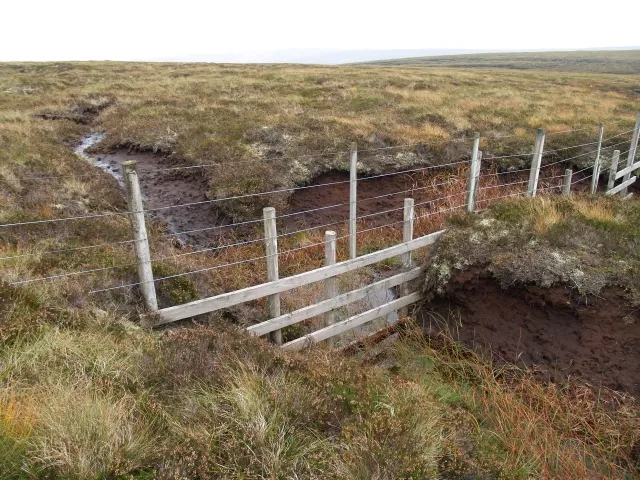
Photo: Chris Eilbeck, CC BY-SA 2.0, via Wikimedia Commons
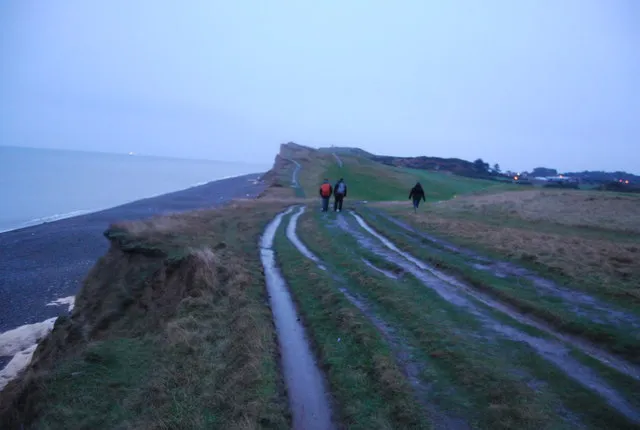
The phrase 'it's only a mile' has caused more epics on British hills than any forecast, any late start and any pair of cheap boots. It's technically true and practically a lie. On a road, a mile is twenty minutes. On the northern edge of Kinder in February it can be the best part of an hour — and that's before you've found the path.
Naismith's Rule was never meant to be a guarantee. It was a rough aid, and we've been quietly over-trusting it ever since.
What Naismith actually said
William Naismith, a Scottish mountaineer and a founder of the Scottish Mountaineering Club, came up with his rule in 1892. The version most of us carry about in our heads is: allow one hour for every 5km, plus one hour for every 600m of ascent. A decent starting point. A terrible finishing point.
What it assumes is a reasonably fit walker, on a reasonably good path, in reasonable weather. Three words doing an enormous amount of work in a country where a good path can turn into a bog in fifty metres. Add Tranter's later correction — quicker on gentle descents, slower on steep ones — and you have a slightly better model that still has no concept of a peat hag.
Four British terrains that eat the rule alive
Peat and hags. Kinder, Bleaklow, the Cheviots, great swathes of Scotland. Ground that reads as flat on the map and takes three strides per metre, with holes that go up to your thigh.
Boulder fields. The Glyder Fach plateau, the Carneddau, Dartmoor's clitter. Somewhere between walking and scrambling, and faster than neither.
Tussocks and heather. Mid-Wales, the Flow Country, the Ochils. No path, no rhythm, no chance of the pace you planned.
Field paths and stiles. The stuff that looks easy. A five-bar gate, a poached gateway, a kissing gate, a wall you have to follow for two hundred metres to find the gap. Twenty seconds each, thirty times a day, is ten minutes you never budgeted for.
There's also daylight, which the rule ignores completely. Scottish winter serves up around seven hours between sunrise and sunset, and the usable walking day is nearer six once dawn and dusk are discounted. A route that's a pleasant afternoon in June is a headtorch descent in December with exactly the same Naismith number.
Build your own pace model
Naismith is the starting point. Your own logbook is the real answer. After every walk, note four things: distance, ascent, moving time and a one-word terrain verdict — track, path, rough, brutal.
Half a dozen entries and the pattern shows up. Mine, for what it's worth: 4.5km/h on tracks, 3km/h on a decent hill path, 2km/h through pathless heather, and a shade over 1km/h in a boulder field with a pack on. That last figure isn't a typo.
Then time a day like this:
- Naismith hours: distance in km ÷ 5, plus ascent in metres ÷ 600.
- Multiply by a terrain factor: 1.0 for track, 1.2 for good path, 1.5 for rough ground, 2.0 or more for boulder fields and hags.
- Add 10 minutes per hour for stops, layers, food and photographs.
- Compare the total to your daylight window, not to sunset.
If step four feels tight, the route is too long. Not 'a bit long'. Too long.
Pick your turn-around before you leave
This is the part people skip, and it's the part that keeps mountain rescue teams in business. Before you set off, agree a place and a time. 'We turn round at the col at 14:00, or at the second ford, whichever comes first.'
Mark it on the map. Say it out loud so the whole group hears it. It removes the argument at the top of the hill, when everyone is tired and nobody wants to be the one who suggests going down — and it makes the decision for you when the cloud drops.
You need both halves. A time on its own means you might never get near your objective. A place on its own means you might reach it at dusk.
A worked example
A late-autumn circuit on Kinder from Edale: 14km, 550m of ascent, plenty of peat and flagstone.
Naismith gives 2.8 hours for the distance plus 0.9 for the height — 3.7 hours. A terrain factor of 1.35 for peat and flagstone takes it to five hours. Add stops at 10 minutes an hour and you're at roughly 5.5 hours of walking day.
Mid-December in Edale gives about seven and a half hours between sunrise and sunset. Take half an hour off each end and you have six and a half hours of useful light. It fits — with an hour in hand, on a route you know, in weather you've actually checked. Make the ground deep snow and the whole calculation falls apart.
That's the value of doing the sums properly. It tells you when you're one broken bootlace away from a headtorch descent, rather than letting you find out at the summit cairn.
Don't trust the app either
Komoot, Strava and the OS Maps route planner all lean on variations of the same flat-earth maths, because it's cheap and easy to run. They're excellent for distance, ascent and navigation, and unreliable for time. Use them to draw the line, then do the timing yourself.
Naismith's Rule is a fine starting point and a poor excuse. A mile is a mile. What it costs you is entirely a question of what you're walking on.