The Gust Ledger: Balancing a Hill Day Against the Wind Forecast
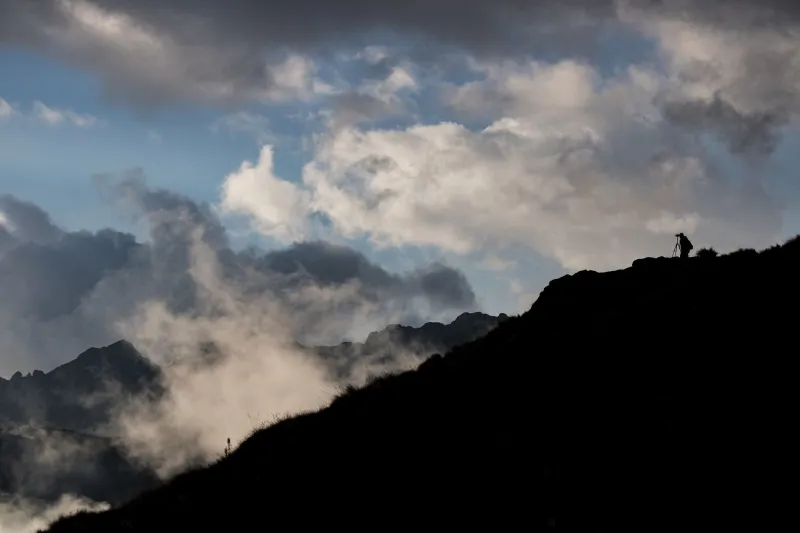
We spend a lot of time and money worrying about water falling out of the sky. Shells, trousers, dry bags, the whole damp industry. Meanwhile the thing that most often turns a good day into a grind is completely invisible in a photograph: moving air.
A breezy forecast is not a warning to cancel. It's a bill you'll be paying, one way or another, and the earlier you look at the number the cheaper it gets. Pay it at the kitchen table, with a map and a coffee, and you'll barely notice. Ignore it, and you'll pay it on a plateau at 2pm with cold hands and half a flapjack.
Read the Number, Not Just the Arrow
Most of us glance at the wind symbol, see '20 mph', and mentally file it under fine. That number is usually an average, and averages are the least interesting part of the story.
Look for the gust figure alongside it. A mean of 20 with gusts of 35 is a different day out from a steady 20 with gusts of 24. Gusts are what knock you off balance on a boulder field, whip a map out of your hand, and make the difference between a brisk summit and a brief wrestling match with the weather.
Then add height. Wind speeds climb as you gain altitude, so the sheltered valley car park tells you almost nothing about the 900m contour. Met Office mountain forecasts and the Mountain Weather Information Service both give you the upper-level picture, and it's worth reading them the night before rather than at the trailhead with one boot on.
Finally, think about exposure and aspect. A 25 mph wind on a forest track is a pleasant rustle. The same wind across an open ridge with a big drop on one side is a completely different proposition, because it's the combination of speed and consequences that empties your tank.
What the Wind Actually Charges You
Here's the bit that rarely makes it into the planning. Wind doesn't just make you cold. It slows you down, and it does it in a way that compounds.
A headwind on exposed ground, mixed with soft winter grass or loose scree, can add a fifth to your day without you noticing until the light starts going. Every step costs more. Your posture changes, you lean, your stride shortens. If you're carrying a big pack, you've turned yourself into a sail with legs.
Then there's the stop tax. On a calm day you can sit on a summit for twenty minutes, eat properly, sort your layers, take the photo. In a stiff breeze that becomes five minutes hunched behind a cairn, and you leave colder and less fuelled than you arrived. Groups suffer worst, because the strongest walker sets a pace that the back of the queue can't hold into a headwind, and the whole thing accordions.
And the quieter cost: navigation. Wind makes people rush. Rushed people misread bearings. Add spindrift, streaming glasses and a map that wants to leave the country, and the error rate goes up exactly when you can least afford it.
Route Shape Is Your Cheapest Lever
You can't change the wind, but you can choose which bits of the hill you meet it on.
Start with direction. A westerly means the eastern corries, the lee-side approach paths and the sheltered glen are all working in your favour. That might mean picking a different hill altogether rather than forcing the plan you made in August. Choosing the right mountain is easier and more effective than micro-optimising a route on the wrong one.
Then think about shape. An out-and-back with the wind at your back on the return is often kinder than a circuit that puts you head-on into it on an exposed plateau halfway round. Doing the hard, exposed, into-the-wind leg first, while everyone is fresh and the day is young, buys you margin later.
Ridges, cols and plateau edges are where the wind concentrates and funnels. If the forecast is marginal, a route that stays in the lee, uses a broad shoulder rather than a knife-edge arête, and keeps the big open ground for the descent is worth more than any piece of kit you could buy this month.
Recalculate the Daylight
Naismith's rule is a decent starting point and a poor finishing one on a windy day. Once you're above about 20 mph on open ground, add time — 15 to 25 per cent is a reasonable fudge for a headwind and rough terrain, more for a big group or a heavy pack.
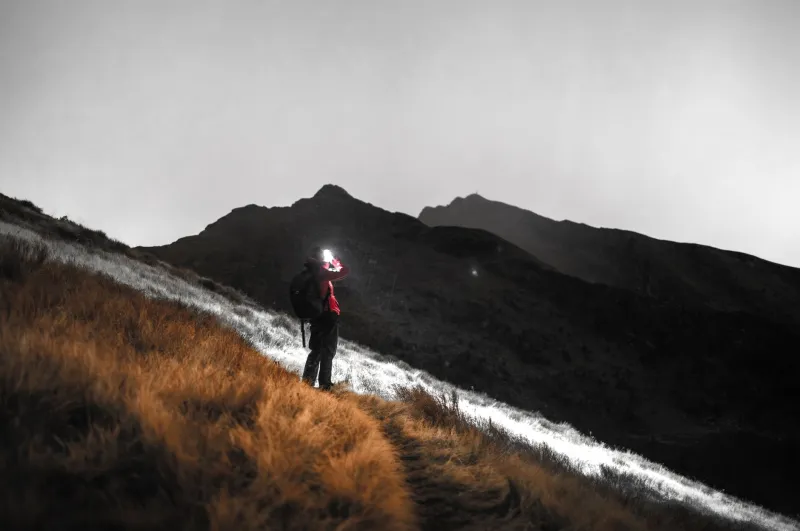
More important than the total is the turnaround. Fix it by clock, not by summit. 'We turn at 1:30 whatever happens' is a rule that survives egos, whereas 'we'll see how we get on' is how people end up descending in the dark with headtorches they didn't check.
And set a second trigger: a wind speed at which you simply stop going higher. If gusts are pushing you around on a broad path with no real exposure, they'll be considerably worse on the summit ridge. That's not a judgement on anyone's toughness. It's just arithmetic.
Shelter Is a Skill Worth Practising
On blowy days, small habits add up. Keep stops under five minutes. Eat on the move, in pocket-sized pieces, rather than committing to a sit-down that chills you through. Use walls, boulders, crags and the lee of a rise rather than the summit cairn, which is by definition the most exposed spot for miles.
A group shelter earns its place in the pack far more often than people admit, and even a bothy bag that never comes out is cheap insurance for a forced stop. If the wind is genuinely serious, dropping into the valley for a low-level finish is a decision, not a defeat.
Kit That Pays the Charge Down
You don't need anything new. You need a windproof layer over your insulation rather than a waterproof doing the job badly, a hood that stays up, glasses for spindrift, and a map case that doesn't turn into a kite. Poles help more than you'd think when you're being pushed sideways. A warm hat is worth more per gram on a windy day than almost anything else in the pack.
The Sane Version of the Day
Sometimes the honest answer is that the hill can wait. A windy forecast is a great argument for a lower, more sheltered day: a forest circuit, a lee-side coastal path with hedges to hide behind, a valley walk that still gets you out. The tax on those days is small, and you bank the fitness for the one you actually wanted.
Wind is going to send you a bill. The only question is whether you settle it in advance with a map, a forecast and a bit of humility, or on the hill, in the cold, at four in the afternoon.