One Pot, Forty Quid: Real Meals for Bothy Nights and Wild Camps
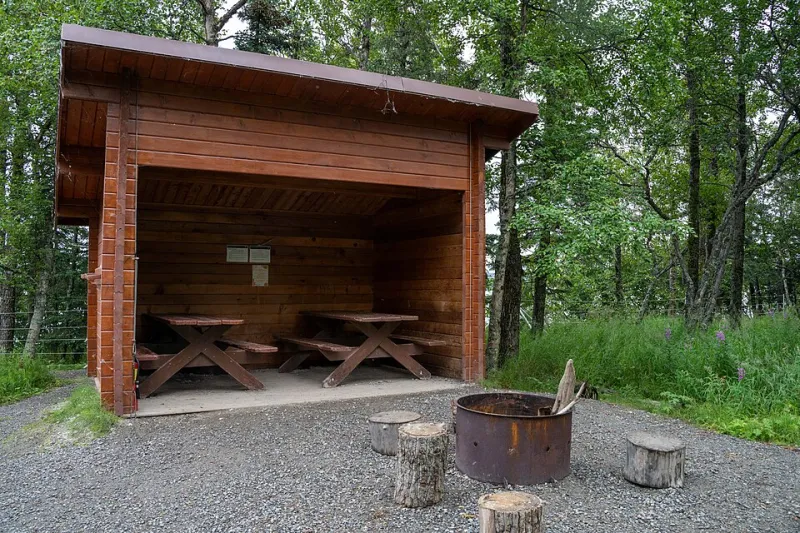
Photo: KatmaiNPS, Public domain, via Wikimedia Commons
I've eaten badly in a bothy more often than I'd like to admit, and the cause is always the same: I planned the route and left the food until the 9pm garage stop. What came out of the rucksack was nine quid of freeze-dried something, a squashed sausage roll and a lot of hope.
The fix isn't a dehydrator, a vacuum sealer or a spreadsheet of macros. It's about forty quid spent in a supermarket, a single 750ml pot and a bit of routine. That's the whole system, from larder to washing up.
One pot, one lid, one stove
Everything below assumes you're cooking for one or two in a 750ml–1 litre pot with a lid, on a small canister stove. If your lid doubles as a bowl, great. If not, a bandana wrapped round the hot pot works as a handle and doubles as a pot cosy once you take it off the heat — five minutes wrapped in fabric is free fuel. A long-handled spork beats a short one. A cut-down windshield saves more gas than any other kit decision you'll make all weekend.
Don't buy anything else. The pot you already own is fine.
The £40 larder
This list is deliberately dull and deliberately British-supermarket. It covers two dinners and two or three breakfasts for one person, or a comfortable weekend for two, and weighs around 1.8kg dry.
- 500g porridge oats — 90p
- 250g dried milk — £2.50
- 340g peanut butter — £1.80
- 250g couscous — 80p
- 200g instant mash — £1.40
- 200g chorizo ring — £2.20
- 200g hard cheese, waxed or vac-packed — £3
- Two tins of fish in oil — £2.40
- 100g dried mushrooms from an Asian grocer — £2
- A tube of harissa or tomato purée — £1.50
- Six stock cubes — £1.20
- A bag of oatcakes — £1.30
- 200g dried apricots — £1.60
- 200g dark chocolate — £2
- Olive oil decanted into a 100ml bottle — £1.50
- Tea bags, sugar, salt, mustard powder, mixed herbs — £3
- A bag of nuts and something to mark the occasion — £6
That lands just under forty pounds if you shop at Lidl or Asda and don't insist on organic oats. Repack everything into zip bags at home and write the contents on each bag with a marker. You will not remember which white powder is the milk and which is the mash at eleven o'clock at night in the dark.
Recipe one: porridge you don't have to stand over
60g oats, 25g dried milk, a pinch of salt, a handful of chopped dried apricots. Put it all in the pot with 300ml water before you go to bed, lid on, and leave it in the porch overnight. In the morning it's already soft, so it needs three or four minutes of gentle heat rather than eight — gas you don't have to carry. Stir in a spoonful of peanut butter at the end.
Eat straight from the pot. Then wipe it out with an oatcake, eat the oatcake, and you've done breakfast and half the washing up in one move.
Recipe two: chorizo and mushroom couscous
Dice about a third of the chorizo ring. Fry it in its own oil for two minutes — no added fat needed. Add a handful of dried mushrooms, one stock cube and 250ml water, and bring to the boil. Tip in 80g couscous, stir once, lid on, off the heat, wrapped in the bandana for five minutes. Stir harissa through to taste.
One pot, one boil, nothing to drain. That last point is the entire reason couscous beats pasta in a bothy.
Recipe three: the Saturday-night mash
Genuine bothy food, this, and about 90p a portion. 60g instant mash, 40g chopped cheese, a few slices of chorizo or a tin of fish, a pinch of mustard powder and mixed herbs, made up with 300ml of stock. If you're feeling ambitious, fry the chorizo first and use the fat instead of the olive oil.
It looks like wallpaper paste and tastes like a Sunday afternoon. That's rather the point.
How much gas a bothy weekend actually drinks
Rough numbers, gathered over too many trips: in still air with a windshield, a 100g canister will boil somewhere between five and eight litres. In wind, in the cold, or with a wide pot and no lid, halve it. Budget 10g of gas per 500ml boil in decent weather and 20g when it's below freezing and blowing.
For a two-night trip with three hot meals and a brew habit, take a 230g canister. Warm the canister in a jacket pocket before you cook, keep the lid on, and don't bother trying to melt snow — you'll burn a whole canister doing it and still be thirsty.
Water: where to get it, when to trust it
Most Mountain Bothies Association buildings sit near a burn, and most of the time that's your supply. Collect from fast-flowing water above the bothy and above any grazing, and treat it. A 60g squeeze filter deals with the silt and the usual suspects; boiling sorts everything else but leaves the peat taste behind. Filters don't catch viruses, which is a small risk in the UK but not a zero one.
Carry at least a litre up with you in case the tap is frozen or the burn is low. A bothy with a good burn and a bothy with a stagnant ditch look identical on the map.
Washing up without leaving a mark
Never wash anything in the burn, and never use soap anywhere near it. Scrape the pot with the spork, wipe it with a bandana or another oatcake, and bag the scraps. Food left in a bothy brings mice, and mice bring the bothy's closure.
A small scouring pad and 200ml of hot water gets a pot clean enough for tea. Then either drink the grey water or scatter it well away from the building and from any watercourse. Pack out every scrap of packaging, tea bags included.
Sweep the floor, take your rubbish and your empty canister out with you, and leave the place for the next person exactly as you'd want to find it.