The Kitchen-Scale Fuel Plan: Gas for a Bothy Weekend Without the Guesswork
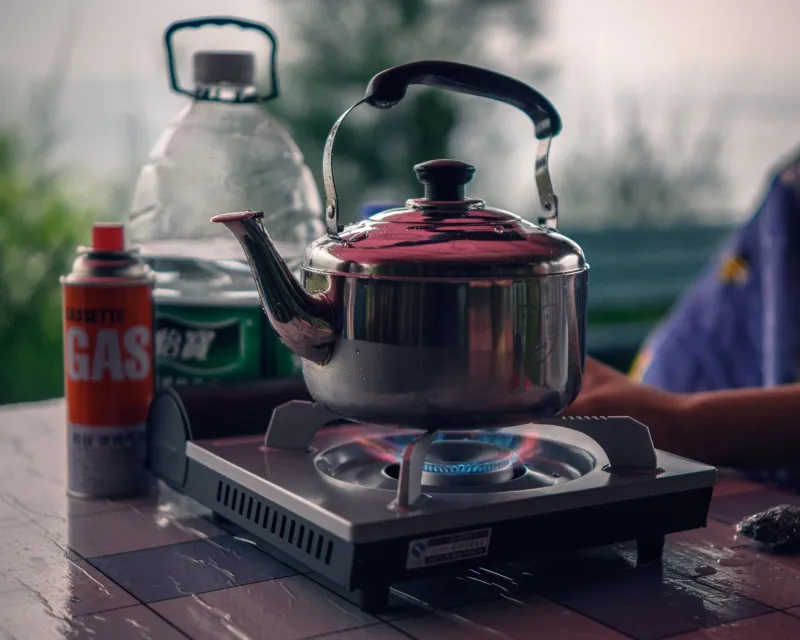
Every bothy weekend has a version of this scene. Someone pulls a gas canister from the bottom of a pack, gives it a shake, and declares it has 'probably got a night in it'. Two hours later, the stove is wheezing through the last of the gas while the pasta water sits at a lukewarm simmer. The canister wasn't half full. It was half full of hope.
Gas is one of the few consumables on a hill trip that we routinely judge by feel. We wouldn't guess at how much water we were carrying, or how many matches were left. Yet canisters get the rattle test and an optimistic shrug. A set of kitchen scales and a marker pen will give you a far better answer.
The shake test is a rumour
A canister's rattle tells you something is inside. It doesn't tell you how much, and it certainly doesn't tell you how much usable gas is left in cold conditions. The liquid sloshes around, the canister feels heavy enough, and the whole thing becomes a confidence trick.
Part of the problem is that canisters come in different sizes and gross weights. A 230g canister might weigh around 370g when full. A 100g canister might be 200g all in. Those numbers vary by brand and valve design. If you don't know the empty weight, the number on the scale is just a number.
The fix is simple: weigh the canister when it's new, note the figure, and weigh it again after a trip. You don't need a laboratory. A digital kitchen scale that reads to the nearest gram is fine. Write the date and weight on a strip of tape wrapped around the canister, or keep a note on your phone. It takes thirty seconds and removes most of the guesswork.
What the numbers actually mean
If you know the net gas weight - usually printed on the canister - you can work out how much you've used. Suppose your 230g canister started at 370g. After a weekend it weighs 330g. You've burned 40g. That leaves roughly 190g of gas, assuming the canister was full to start with. If you want to know the empty weight, weigh a spent canister of the same model, or look up the manufacturer's figure. Then the arithmetic is straightforward.
This matters because 'nearly full' is not a fuel plan. A canister that has done two brews and a dinner might still be 80 per cent full. A canister that has been used for a week-long car camp might look identical in the hand but be running on fumes. The scale tells you which is which.
Building a rough fuel budget
You don't need to know your stove's burn rate to the decimal place. You need a working estimate and a margin. In sheltered, mild conditions, boiling half a litre of water typically uses around 5-7g of gas. Add wind, cold water, a cold canister and an inefficient pot, and that can easily climb to 8-12g. A litre boil for pasta might use 10-15g in reasonable conditions, more if you're cooking outside a bothy in a gust.
For a typical bothy weekend, one person might do two dinners, two breakfasts and a handful of brews. That's perhaps 1.5-2 litres boiled for dinners, 1 litre for breakfasts and another litre or so for hot drinks. In mild weather, call it 40-55g. In a cold snap, with a cold canister and a breezy doorway, budget 60-80g. Add a 25-30 per cent margin for the unexpected: a longer boil, spilt water, a second cup of tea after a wet walk.
That puts a two-night solo trip comfortably within a 230g canister. A 100g canister is marginal unless you're doing one night, one dinner and very few brews. Two people sharing a stove should generally carry a 230g canister for a weekend, or a 450g if they like proper cooking and a lot of tea. Groups should do the maths together rather than assuming someone else has 'a big one'.
The part-used canister question
This is where most of us accumulate a cupboard of half-used canisters. Each one feels too good to bin and too small to trust. The scale gives you a way to decide.
First, estimate what the trip needs. Then add your margin. If the canister has more than that left, it's worth carrying. If it's close, carry a second small canister or leave the part-used one for a day trip where you'll only boil a brew. If it's below about 20g, it's not a bothy weekend canister. Use it up on a car camp, a picnic stove or a quick lunch stop, and recycle it through your local council's facilities if they accept gas canisters. Never refill a disposable canister and never puncture one to 'empty' it.
There's also a packing argument. A 230g canister weighs about 370g full. A part-used one might weigh 300g. Saving 70g is not worth a cold dinner. If the scale says the margin is thin, take the heavier canister and stop negotiating with yourself.
Cold weather changes the rules
Most UK camping canisters are a butane-propane mix. Butane struggles to vaporise near freezing, while propane keeps working at lower temperatures. That's why a canister that performed fine in September can feel gutless in a frosty bothy in February. The fuel is still in there, but it isn't turning into gas fast enough.
Keep the canister out of the cold before use - inside your jacket while you walk the last kilometre, or in a pocket rather than strapped to the outside of the pack. Use a windshield, put a lid on the pot and don't run the stove flat out. A remote canister stove with a preheat coil can help in properly cold conditions, but it isn't a magic fix. And never cook in a sealed bothy without ventilation; carbon monoxide doesn't care how good your fuel maths is.
A simple bothy routine
Before you leave, weigh every canister you're considering and write the weight on tape. Pick the one that covers your estimate plus margin. At the bothy, keep it out of the wind and off the cold floor. After the trip, weigh it again and note the difference. That's it. Over a season you'll build a picture of how much gas your cooking actually uses, rather than how much you think it uses.
The rattle test will always be tempting. But a canister isn't a riddle. It's a number. Treat it like one, and you can leave the good-luck shrug at home.